
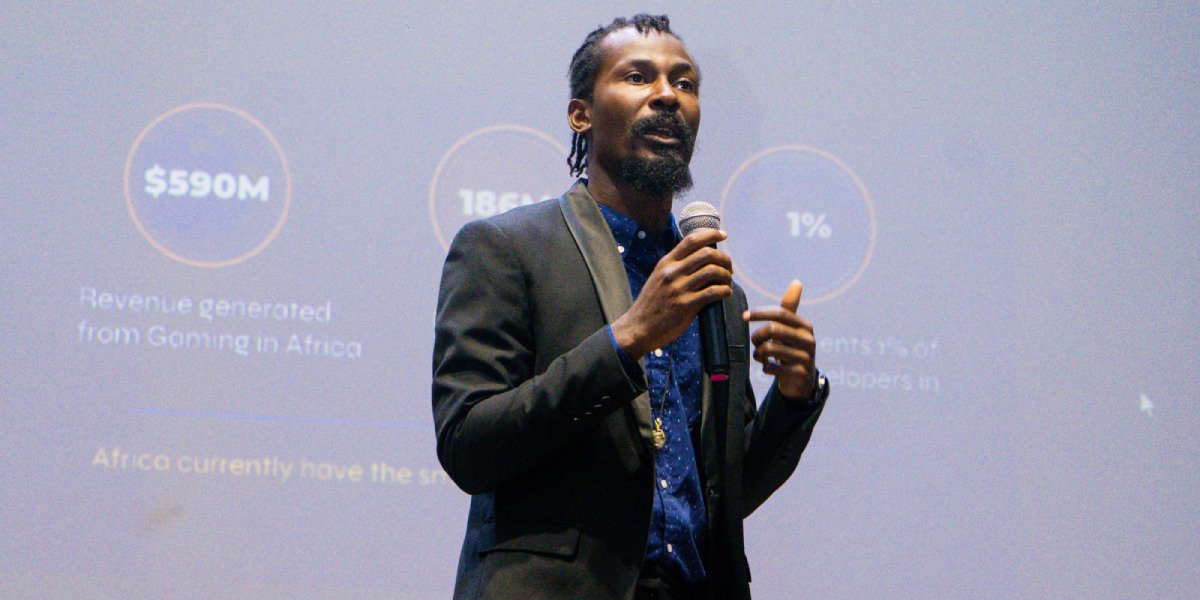
Long before Michael Oscar Esio thought about building Africa’s gaming industry, he was a Nigerian child fascinated by the worlds inside comics.
He had games too: a Sega console, a Game Boy, and one of those VCD and DVD-player consoles that came with games, the kind familiar to many Nigerian children of his generation. But comics were different.
“I was especially into comics,” he says. “I read a lot of Marvel and DC comics.”
It is an interesting place to begin the story of someone who would eventually build a company around gaming. Michael was familiar with games, but he was never the stereotypical gamer spending every available hour with a controller in hand. Even now, while running one of the continent’s most ambitious gaming ecosystems, he says he does not spend up to five hours a week actually playing.
His deeper interest was always in the worlds around games: the art, the characters, the stories, and the creative processes that connected them all.
Michael fell in love with storytelling first. Only later did he recognize that games were one of the most powerful and underused storytelling mediums available to his generation.
Games could do something comics, films, and music could not do in quite the same way. They could place people inside a world and allow them to move through it. Players could make decisions, explore environments, interact with characters, and become part of the story.
That distinction would become important later. Michael was not interested in games only as products or entertainment. He was interested in the worlds they could create, the people they could connect, and the opportunities they could generate for different kinds of creators.
The path from that comic-loving child to the founder of Africacomicade, however, was not straightforward.
Searching for the Right Industry
Michael eventually made his way to Accra for the MEST Africa program, where he studied software entrepreneurship.
The program exposed him to the mechanics of building technology businesses, but it also took him through a variety of industries. During and after the program, he explored digital marketing, artificial intelligence, agriculture, and even oil and gas.
Each experience taught him something different about business, technology, and the kinds of opportunities available to young African entrepreneurs.
But gaming was the one thing he kept circling back to.
“It wasn’t just because of my passion for games,” he says. “It was because I realized how significant the industry is globally.”
The global game industry had grown larger than film and music combined. It was creating jobs, driving innovation, supporting technology companies, and providing a platform for cultural representation.
Games were no longer only about entertainment. They were connected to software, animation, music, storytelling, design, advertising, hardware, education, and online communities.
Africa, meanwhile, was capturing very little of that value.
“We don’t have 1,000 active game developers in Nigeria,” Michael says.
The statement was not only about the number of developers. It reflected a much larger absence: too few studios, publishers, investors, training programmes, industry networks, and commercial pathways for people who wanted to create games.
That gap between the global scale of the industry and Africa’s limited participation turned Michael’s interest into a founding decision.
Seeing Gaming as an Ecosystem
Michael began to see gaming as an industry with the potential to connect several parts of Africa’s creative and technology economies.
A game may begin with a programmer, but it rarely ends there. It also requires artists, animators, writers, sound designers, producers, marketers, community managers, and business operators.
Michael often compares game development to music. A song may appear to belong to one artist, but behind it are producers, beatmakers, sound engineers, A&R professionals, managers, video directors, and marketers.
He also compares it to film, where the closing credits of a single production can include hundreds of contributors.
Game development works in much the same way.
Programmers are only one part of the process. There is room for digital artists, illustrators, animators, 3D modelers, narrative designers, sound designers, user-experience specialists, quality-assurance testers, and producers.
That broader view helped Michael understand the industry’s potential. It also helped explain why people who trained in game development often moved into other fields.
Many completed training programs, learned the basics, and then moved toward web development, mobile applications, motion graphics, architecture, advertising, animation, or other fields that offered faster and more reliable income.
Michael does not see that movement as a failure.
He sees it as evidence that the skills developed through gaming are already valuable across the wider creative and technology economy. Someone may begin by learning to build a game and later apply those skills to software, animation, virtual production, 3D design, or advertising.
The longer-term opportunity, he believes, is to build an industry mature enough to bring more of that talent together again, inside stronger studios and more specialized teams.
But when Michael first began paying attention to the sector, that level of maturity was still far away.
Building Beyond Small Studios
Most African game studios were small, typically made up of five to ten people. Team members often wore multiple hats out of necessity rather than choice.
One person might be responsible for programming, production, business development, and community management. Another might combine illustration, animation, character design, and marketing.
In larger international studios, those responsibilities would usually be divided among specialized departments. In Africa, people often had to do several jobs simply to keep a project moving.
The problem was not a lack of talent. It was the absence of structures that could help talent grow.
Creators needed better access to training, funding, publishers, mentors, distribution platforms, and business support. They also needed opportunities to meet other people who understood the same challenges.
A developer working alone in Lagos might need an artist in Nairobi, a writer in Accra, or a sound designer in Johannesburg. But without a network connecting them, those collaborations were difficult to find.
Michael began to see that building a gaming industry would require more than teaching people how to use game engines or write code.
It would require an ecosystem.
That ecosystem would need to help creators develop their skills, find collaborators, build original intellectual property, understand the commercial side of the industry, and eventually bring their work to market.
A Pan-African decision
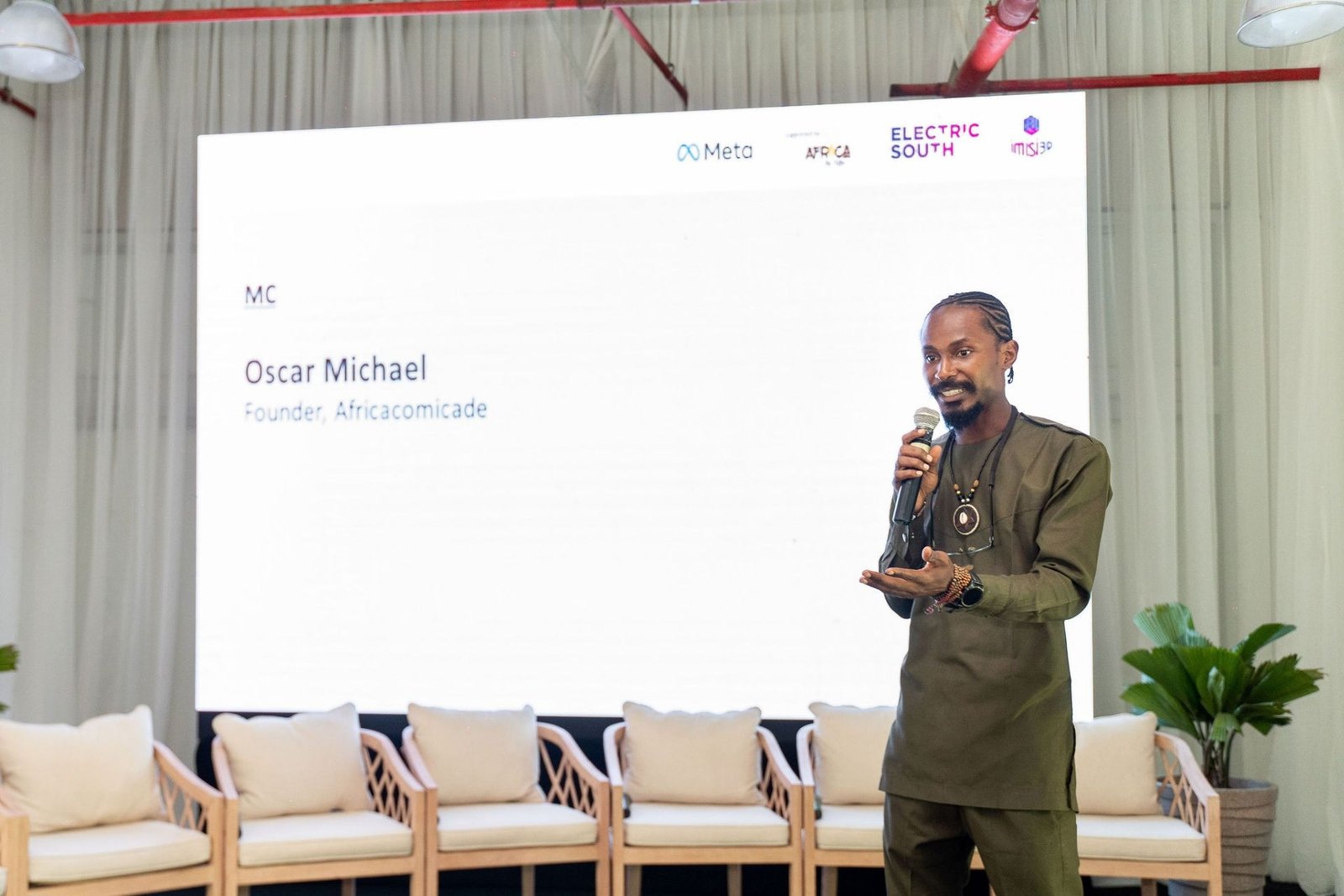
In 2020, during a global pandemic that had disrupted almost every part of the economy, Michael returned to Nigeria and founded Africacomicade.
The organisation’s initial goal was to help build a gaming industry that could create meaningful opportunities for Nigerian creators.
But as the organization began connecting with developers, artists, and creative entrepreneurs in other countries, Michael realized that the challenges were not unique to Nigeria.
“As we started connecting with creators from different African countries, we realized that the challenges we were facing in Nigeria were almost identical to the challenges developers were facing across the continent,” he says. “That’s what inspired us to take a Pan-African approach.”
It was a significant decision for a young organization still trying to establish itself.
Building a national gaming industry from scratch already seemed improbable. Building a Pan-African one appeared even more ambitious.
But Africacomicade believed the scale of the problem required a continental response.
“If Africa’s gaming ecosystem was going to matter, it would have to grow as one ecosystem, not fifty-four small, disconnected ones,” Michael says.
That belief shaped the organization’s earliest work. Africacomicade would not focus only on Nigerian creators or build a network limited by national borders. It would encourage collaboration across the continent.