
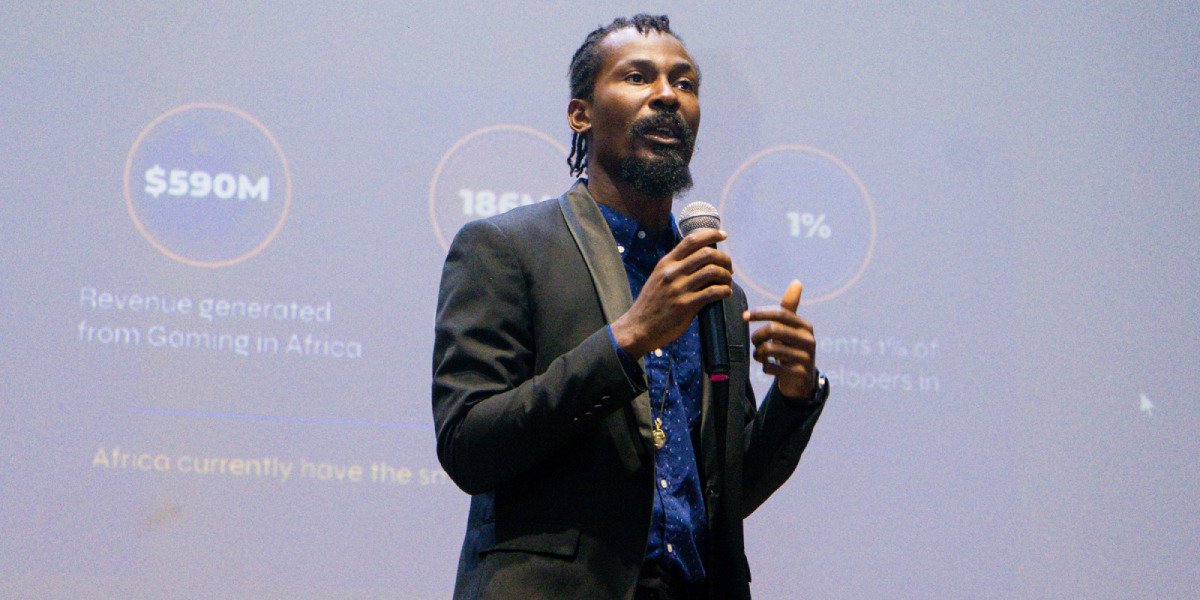
Long before Michael Oscar Esio thought about building Africa’s gaming industry, he was a Nigerian child fascinated by the worlds inside comics. He had games too. A Sega console. A Game Boy. One of those VCD and DVD player consoles that came with games, the kind familiar to a lot of Nigerian kids of his generation. But comics were different.
“I was especially into comics. I read a lot of Marvel and DC comics.”
It’s an interesting place to begin the story of someone who would eventually build a company around gaming. Michael was familiar with games, but he was never the stereotypical gamer spending every available hour with a controller in hand. Even now, running one of the continent’s most ambitious gaming ecosystems, he doesn’t spend up to five hours a week actually playing.
His deeper interest was always in the worlds around games: the art, the characters, the stories, and the creative pipelines that connected them all. Michael fell in love with storytelling first and only later recognized that games were simply the most powerful, most underused storytelling medium his generation had access to.
The path from that boy to the founder of Africacomicade, however, was not straightforward.
Searching for the Right Industry
He made his way to Accra for the MEST Africa program to study software entrepreneurship, the kind of program designed to turn young Africans loose on real problems across real industries. Michael went looking broadly. He worked in digital marketing. He experimented with artificial intelligence. He explored agriculture. He even had a stint in oil and gas.
It reads like restlessness, but it wasn’t; it was a search. Every industry he touched was, in some way, a test of where his storytelling instincts might matter most.
He kept circling back to gaming.
“It wasn’t just because of my passion for games,” he says. “It was because I realized how significant the industry is globally.”
By the time Michael was paying close attention, the numbers had already made their case. The game industry had grown larger than film and music combined, a fact that still surprises people outside it.
Globally, gaming was quietly becoming one of the biggest engines of economic growth, revenue, job creation, innovation, and cultural representation of the digital era. Africa, meanwhile, was capturing almost none of that value.
Seeing Gaming as an Ecosystem
To understand why Michael became so convinced of gaming’s potential, it helps to understand how he sees the industry itself. Most people picture “game development” as a single person hunched over code.
Michael pushes back on that image almost instinctively. He instead compares it to the music industry: an entire talent pipeline of A&R professionals, producers, sound engineers, beatmakers, video directors, and marketers, all working to bring one song to life.
Or to film, where the closing credits of a single movie can list hundreds of contributors.
Game development, in his view, works the same way. Programmers are only one piece of it. There is room for digital artists, animators, 3D modelers, narrative designers, sound designers, and user-experience specialists. It is an entire ecosystem of crafts, not a single skill.
That framing mattered because it explained something that had been quietly bothering him: why so few people who trained in game development in Africa actually stayed in the field.
Many completed training programs, learned the basics, and then drifted toward web development, mobile apps, motion graphics, architecture, or advertising, fields that offered faster, more reliable income.
Michael doesn’t see this the way outsiders often do, as a failure of the ecosystem to retain talent. He sees it as evidence of how transferable and in-demand these skills already are and as raw material for something bigger.
That could happen once the industry matures enough to bring that talent back together into stronger studios instead of scattered individuals.
Building Beyond Small Studios
But in the years he was first paying attention, “maturity” was nowhere close.
Most studios on the continent were small, typically five to ten people, wearing multiple hats out of necessity rather than choice.
“We don’t have 1,000 active game developers in Nigeria,” he says.
That gap between the industry’s global value and what Africa was capturing from it is what turned Michael’s interest into a founding decision.
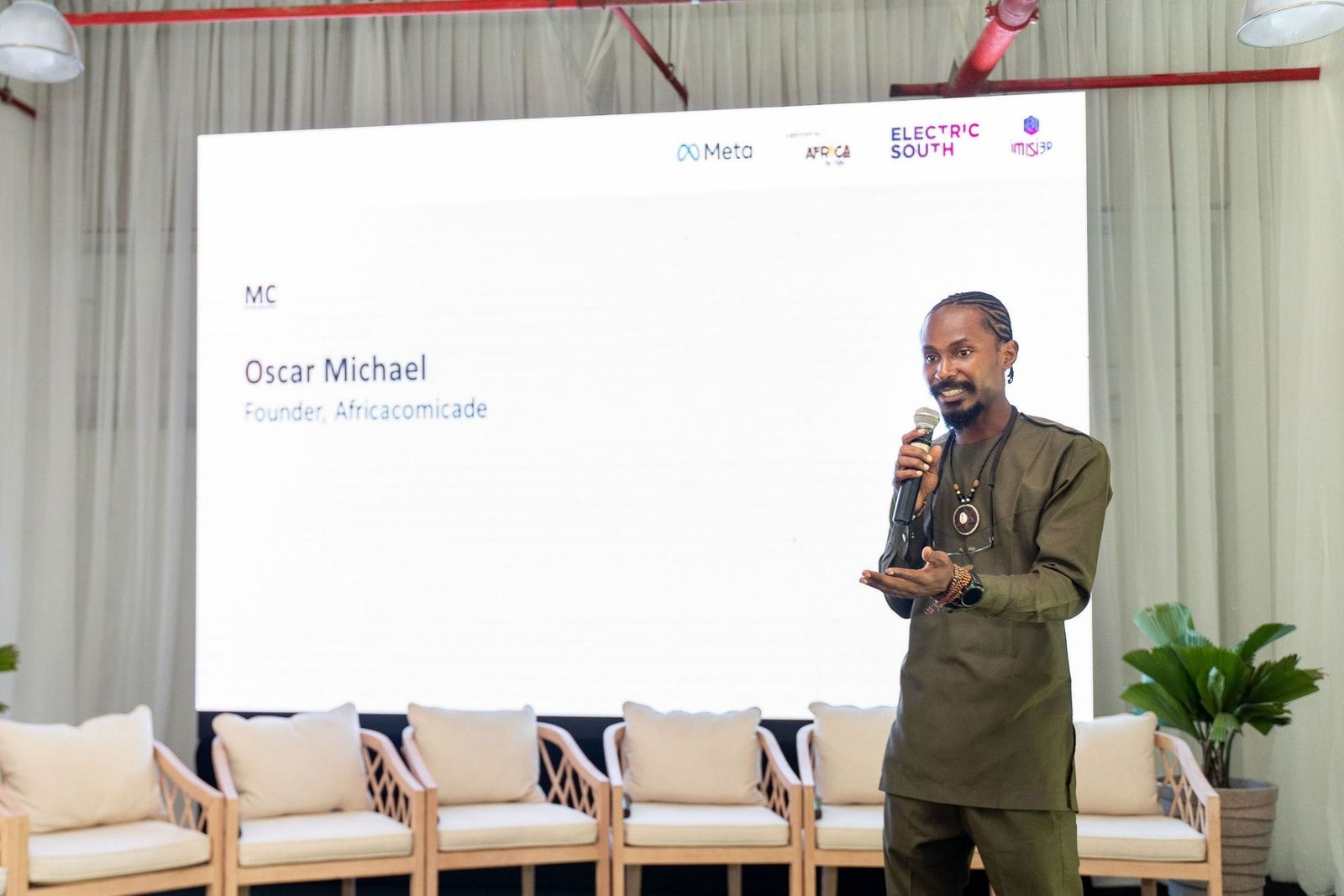
In 2020, at the height of a global pandemic that had shut down almost everything else, he returned to Nigeria and founded Africacomicade. He was driven by a simple ambition: to help build a gaming industry that could create real opportunities for Nigerian creators.
“If Africa’s gaming ecosystem was going to matter, it would have to grow as one ecosystem, not fifty-four small, disconnected ones,” Michael said.
That decision, made quietly in the middle of a pandemic, is where the real work of building Africacomicade began.